
English 
Tel: +86-592-6016338
WhatsApp: +8613859908475
WhatsApp: +8613859908475
Add: No. 16 Yifa 1st Road, Yifa Industrial Park, Dushi Village, Pingtan Town, Huiyang District, Huizhou, Guangdong, China


Views: 0 Author: Site Editor Publish Time: 2026-09-15 Origin: Site


Treating industrial or cleanroom wipes as a generic commodity often leads to severe operational consequences. You might face dangerous cross-contamination, unexpected product defects, or highly inflated procurement budgets. Many facilities completely overlook the baseline structural differences between wiping materials. A nonwoven construction bonds short fibers together using mechanical, thermal, or chemical methods. Conversely, a knitted architecture loops continuous synthetic yarns to form a resilient, interlocking structure. Understanding this fundamental distinction prevents catastrophic failures in strictly controlled environments.
This article serves as a comprehensive technical evaluation guide for your operations, quality control, and procurement teams. You will learn how to accurately align wipe specifications with precise environmental demands and stringent regulatory compliance standards. We will break down distinct manufacturing architectures, critical performance dimensions, and chemical compatibility requirements. Finally, you will gain actionable, evidence-based strategies to select the right material for your specific operational workflow.
Structural Integrity: Knitted wipes utilize continuous filaments (usually polyester), offering superior abrasion resistance and ultra-low particle generation for critical environments.
Cost-Efficiency & Absorbency: A standard nonwoven wipe typically blends cellulose and synthetic fibers, providing exceptional spill capacity and cost-effectiveness for less stringent classifications (e.g., ISO 6-9).
The Core Trade-off: The decision rests on balancing strict contamination control limits (particle shedding) against budget constraints and fluid-handling requirements.
Validation is Mandatory: Procurement should never rely on marketing claims alone; material selection must be validated through site-specific trial protocols and ISO classification compatibility.
Choosing the wrong fabric architecture compromises your core operational protocols. A mismatch directly causes micro-scratching on highly sensitive components. It also leads to failing particulate counts during critical facility audits. Understanding the underlying manufacturing logic empowers teams to make scientifically sound decisions rather than relying on guesswork.
Manufacturers create bonded fabrics by entangling fibers or melting them together. The hydroentangling process, often called spunlace, uses high-pressure water jets to tangle a web of fibers mechanically. Alternatively, the meltblown process extrudes melted polymer through microscopic nozzles to form a dense web. They skip traditional weaving or knitting completely. This flexible manufacturing process allows engineers to manipulate fiber density and composition dynamically.
Composition usually involves intelligent fiber blends. For instance, combining 55% cellulose and 45% polyester maximizes both absorption and mechanical strength. The cellulose provides excellent liquid retention. The polyester adds structural stability to prevent immediate tearing when wet. The final outcome delivers high absorbency, a noticeably softer texture, and lower manufacturing expenses.
The core bonded technology behind a Nonwoven Wipe is highly adaptable across numerous global industries. Similar extrusion and bonding principles drive heavy-duty Construction Nonwovens used for structural moisture barriers. They also power highly porous Filtration Nonwovens for industrial air purification systems, and durable Agricultural Nonwovens designed for crop protection.
Knitted alternatives rely on traditional textile mechanics adapted for extreme purity. Factories construct them by knitting continuous filament yarns into tight, interlocking loops. These products use 100% synthetic continuous filaments, typically high-grade polyester. Because the thread never breaks during the knitting process, loose fiber ends are virtually nonexistent within the body of the fabric.
To secure the perimeter, manufacturers often seal the edges using focused laser or ultrasonic energy. This melts the border, locking every filament in place. The ultimate outcome provides extreme tensile strength, broad chemical resistance, and near-zero linting or particle shedding.
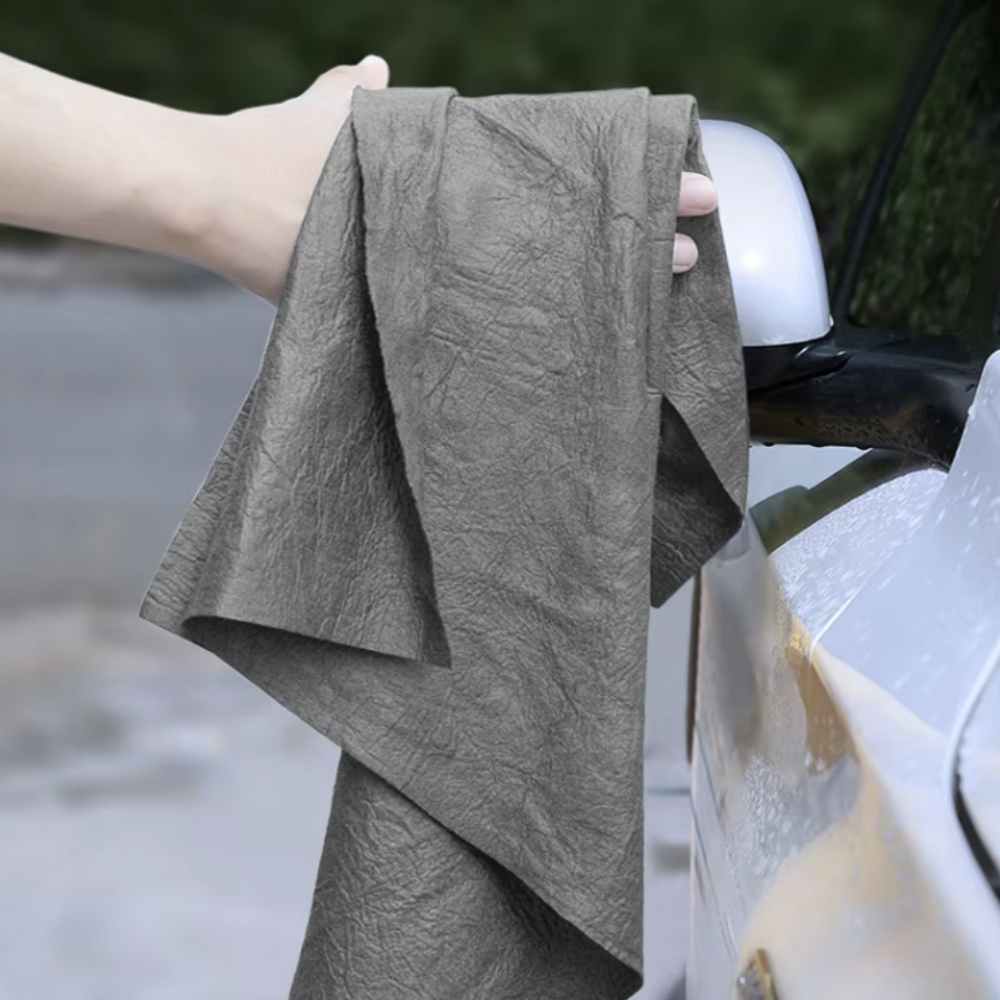
Evaluating material performance requires translating physical features into measurable operational outcomes. You must analyze how each architecture behaves under stress, fluid exposure, and strict cleanroom parameters.
Knitted continuous filaments guarantee minimal to no shedding under standard wiping motions. This characteristic remains mandatory for critical zones. Environments like ISO Class 3–5 cleanrooms, semiconductor fabrication plants, and pharmaceutical aseptic processing labs require absolute particle control. Any foreign debris directly ruins microchips or contaminates sterile drug batches.
Conversely, nonwovens pose a notably higher risk of fiber release under physical stress. The bonded short fibers can break loose when rubbed vigorously against surfaces. Therefore, you should assign them primarily to support areas, heavy industrial cleaning tasks, or lower-grade cleanrooms (ISO Class 6–9).
Cellulose blends naturally trap larger volumes of liquids quickly. The natural hollow structure of cellulose fibers acts like microscopic sponges. They excel at gross spill cleanup or heavy solvent application. If an operator drops a beaker of solvent, a cellulose-blend fabric absorbs the mess rapidly and completely.
Synthetic knitted fibers rely entirely on capillary action between the physical loops. They do not absorb liquid into the actual fiber shaft. Consequently, they hold less volume and absorb liquids noticeably slower. However, specific chemical surface treatments during manufacturing can significantly improve their liquid retention metrics.
Knitted polyester options will not snag, tear, or break down when wiping rough surfaces. This structural resilience aggressively prevents foreign object debris (FOD). Mechanics wiping down aerospace components or sharp stainless-steel machinery rely on this tear resistance.
Bonded blends remain highly prone to tearing under localized stress. They often leave distinct fiber trails when caught on sharp edges, screws, or abrasive substrates. If an operator uses them to clean a threaded pipe, loose fibers will snag and remain behind.
Wipe Architecture Comparison Chart
| Feature / Metric | Knitted Polyester | Nonwoven Cellulose Blend |
|---|---|---|
| Particle Generation | Ultra-low (Near zero shedding) | Moderate to High (Under friction) |
| Fluid Absorbency | Moderate (Capillary action) | High (Instant absorption) |
| Abrasion Resistance | Excellent (No snagging) | Poor (Prone to leaving fiber trails) |
| Cleanroom Suitability | ISO Class 3 - 5 (Critical Zones) | ISO Class 6 - 9 (Support Zones) |
Material behavior changes drastically when introduced to harsh chemicals or extreme heat. Failing to account for chemical compatibility introduces invisible contamination into your controlled environments.
You must evaluate how distinct fabric binders react to aggressive solvents. Exposing certain bonded fabrics to isopropyl alcohol (IPA), acetone, or bleach dissolves internal chemical binders. This chemical reaction leaves unwanted residues on critical surfaces. When the solvent evaporates, a microscopic film of adhesive remains behind, completely compromising the cleaning process.
Understanding contamination requires separating physical debris from chemical residue. Physical contamination appears as visible lint or airborne micro-particles. Chemical contamination involves invisible ions or extractables (like sodium or chloride). Knitted polyester inherently carries very low extractable levels because it lacks chemical binders. You must assess both particulate and extractable risks against your specific product's vulnerability. A microchip might survive a stray fiber but will short-circuit from sodium ion contamination.
Facilities utilizing aseptic processing require completely sterile cleaning supplies. 100% knitted polyester shows exceptional stability under Gamma irradiation. It easily survives multiple cycles of high-pressure autoclaving without losing tensile strength. The polymer simply withstands the thermal and radiation stress.
Conversely, certain cellulose-based fabrics risk severe degradation during sterilization. They often break down during aggressive autoclave cycles, shedding loose, burnt fibers post-process. Always verify sterilization tolerances with the manufacturer before introducing a new material into an aseptic workflow.
Best Practice: Request Non-Volatile Residue (NVR) testing data from your supplier to quantify exact extractable levels before making a purchase.
Common Mistake: Assuming a fabric is chemically inert just because it feels strong when dry. Always conduct wet testing with your specific facility solvents.
Selecting the right fabric solves the technical problem, but implementing it facility-wide introduces distinct operational challenges. Procurement teams must navigate budget realities and operator habits carefully.
Do not standardize a premium knitted product across your entire facility. Placing highly engineered, sealed-edge polyester in non-critical zones artificially inflates the operational budget. It provides absolutely zero added compliance value to wipe down breakroom tables or heavy machinery exteriors. Over-speccing drains procurement resources quickly without improving product yields.
Conversely, do not deploy standard bonded fabrics in critical zones purely to cut immediate upfront expenses. Using a shedding material in an ISO 4 space almost universally results in catastrophic rework. You will inevitably experience failed production batches, customer rejections, or severe regulatory audit penalties. These subsequent financial losses completely dwarf the initial material savings.
Operators frequently complain about premium synthetics during initial adoption phases. They quickly notice the lack of "feel" or immediate absorbency compared to traditional paper products. Operators often prefer the familiar, bulky absorbency of standard blends. They might claim the knitted material merely "pushes liquids around" rather than soaking them up. You must manage this psychological transition through adequate, hands-on training, demonstrating proper wiping techniques and explaining the unseen compliance benefits.
Moving from theory to procurement requires a structured validation process. Avoid purchasing bulk supplies based solely on marketing literature. Follow a logical sequence to align your facility needs with verifiable data.
First, identify the strictest ISO class requirement operating within your facility. Pinpoint the highest surface sensitivity in your daily workflow. This establishes the absolute "floor" for acceptable particle generation. If your core process requires ISO Class 4, any material shedding above that threshold is immediately disqualified.
Implement a strategic two-tier system if logistically feasible. Reserve premium knitted options exclusively for the critical core. This includes sterile cleanrooms, sensitive optical assemblies, or bare-die semiconductor handling. Deploy heavy-duty bonded materials for periphery maintenance, heavy fluid spills, and general facility tooling. Segregation maximizes compliance while strictly controlling spending.
Never purchase a year's supply directly off a specification sheet. Always request physical sample packs. Execute the following empirical validation protocol:
Simulate Abrasive Conditions: Wipe the samples against rough edges, sharp tooling, and textured surfaces identical to your real-world environment. Check for visible snagging or fiber trails.
Verify Solvent Compatibility: Saturate the samples in your harshest facility solvents (e.g., Acetone, 99% IPA). Wipe a clean glass mirror and wait for evaporation. Inspect the glass under bright light for cloudy chemical residues.
Assess Usability: Distribute samples directly to floor operators. Gather qualitative feedback regarding tactile feel, fluid pickup speed, and overall wiping efficiency during routine tasks.
Neither wipe architecture is universally superior; their efficacy remains strictly tethered to the intended application environment. Knitted polyester guarantees absolute purity and structural resilience for critical zones. Meanwhile, bonded cellulose blends offer unmatched absorbency and economical scalability for support operations.
Decision-makers must prioritize empirical testing over broad assumptions. Match the material precisely to your required cleanroom ISO standard. Collaborate directly with manufacturers to obtain verifiable, third-party data on extractables and airborne particulates. By implementing a segmented, tested purchasing strategy, your facility will successfully balance strict contamination control with sustainable operational spending.
A: While highly engineered options, like specific meltblown synthetics, exist for mid-tier cleanrooms, standard cellulose-blend fabrics shed too many particles for ISO 5. They are generally restricted to ISO 6 or higher environments to prevent micro-contamination.
A: Yes. The continuous filament extrusion and edge-sealing manufacturing processes require a significantly higher initial outlay. However, this upfront expense is directly offset by the prevention of critical contamination failures and expensive product rework.
A: Chemical binders used to hold low-end fabrics together can dissolve when exposed to harsh chemicals like acetone. This degradation releases ionic contaminants and invisible chemical extractables directly onto the wiped surface.
A: Sealed edges utilize targeted laser or ultrasonic energy to melt the ends of the filaments at the fabric's border. This prevents fiber release and fraying, remaining an essential feature for minimizing particulate shedding in critical environments.


