
English 
Tel: +86-592-6016338
WhatsApp: +8613859908475
WhatsApp: +8613859908475
Add: No. 16 Yifa 1st Road, Yifa Industrial Park, Dushi Village, Pingtan Town, Huiyang District, Huizhou, Guangdong, China


Views: 0 Author: Site Editor Publish Time: 2026-10-24 Origin: Site


Are you tired of cloudy aquarium water and rapidly clogging filters? Standard single-density pads frequently fall short of expectations. They either clog within days or allow fine dust to bypass the system entirely, sending debris right back into your display tank.
In this comprehensive guide, you will discover how upgrading to a two-layer media system fundamentally solves these persistent maintenance issues. We will explore the fluid mechanics behind multi-stage physical filtration and highlight specific tank setups that benefit most. Furthermore, we will walk through professional stacking methods to help you achieve crystal-clear water while significantly reducing your long-term maintenance costs.
Two is Better Than One: A dual-density pad traps large debris on the robust top layer and polishes microscopic particles on the dense bottom layer, preventing premature clogging and maintaining a steady water flow.
Cost-Efficiency: Upgrading to a bulk media roll saves aquarists a substantial amount of money compared to repeatedly purchasing pre-cut, single-use branded cartridges.
Material Safety: High-quality synthetic polyester is completely non-toxic and chemical-free, making it perfectly safe for delicate freshwater planted ecosystems and sensitive saltwater reef setups.
Proper Stacking Matters: To maximize the operational lifespan and mechanical efficiency of your filter, water must always be directed through the coarse layer first, followed immediately by the dense polishing layer.
Mechanical filtration serves as the physical removal of solid particulate matter from the water column. This constant accumulation includes uneaten fish flakes, heavy fish excrement, decaying plant leaves, and even airborne dust that settles on the surface. An effective mechanical barrier acts as a physical sieve. It intercepts these organic materials before they have the opportunity to break down.
If solid waste decomposes within the substrate or filter housing, it inevitably undergoes mineralization. This process releases highly toxic ammonia and nitrites into the water. By capturing this debris early, you gain a vital window of opportunity. You can physically remove the trapped waste from the system during routine maintenance, directly contributing to a more stable and visually pristine aquatic environment.
Moreover, mechanical filtration does not operate in isolation. It serves as the absolute primary defense mechanism for your biological filtration stage. Biological media relies heavily on a massive microscopic surface area to house beneficial nitrifying bacteria. These essential bacteria require a constant, uninterrupted supply of oxygenated water to process toxic ammonia into less harmful nitrates. When a tank lacks a proper mechanical barrier, thick solid sludge quickly coats the biological media. Consequently, this sludge creates a suffocating oxygen-depleted environment, smothering the beneficial bacteria and causing rapid die-offs.
Most entry-level aquarium filters are packaged with standard single-density mechanical media. This presents hobbyists with a deeply frustrating compromise.
Coarse single-density pads feature a wide, open-porous structure. They excel at catching bulky debris without restricting water flow, yet their loose weave allows fine particulate matter to pass directly through. As a result, the aquarium never quite achieves that invisible water look, often exhibiting a permanent dusty haze. Conversely, tightly packed fine filter floss polishes water beautifully by trapping microscopic dust. However, large debris quickly blocks the outermost surface pores. This leads to incredibly rapid clogging and severely restricted filter outflow. Built-up water pressure forces a bypass route around the pad—a detrimental phenomenon known as channeling—rendering the entire filter useless.
| Filtration Feature | Standard Single-Density Media | Premium Dual-Density Media |
|---|---|---|
| Debris Trapping | Catches either large macro-debris OR fine micro-dust, rarely both efficiently. | Multi-stage trapping captures heavy waste on top and microscopic dust below. |
| Clogging Rate | Extremely high. Surface pores block rapidly, causing immediate flow restriction. | Low. Waste loading is distributed across a thicker, graded fiber matrix. |
| Flow Maintenance | Drops significantly within days as the pad chokes. | Maintained steadily over weeks of continuous operation. |
| Structural Integrity | Prone to tearing or collapsing under pump pressure. | Thermally bonded fibers resist degradation and maintain shape. |
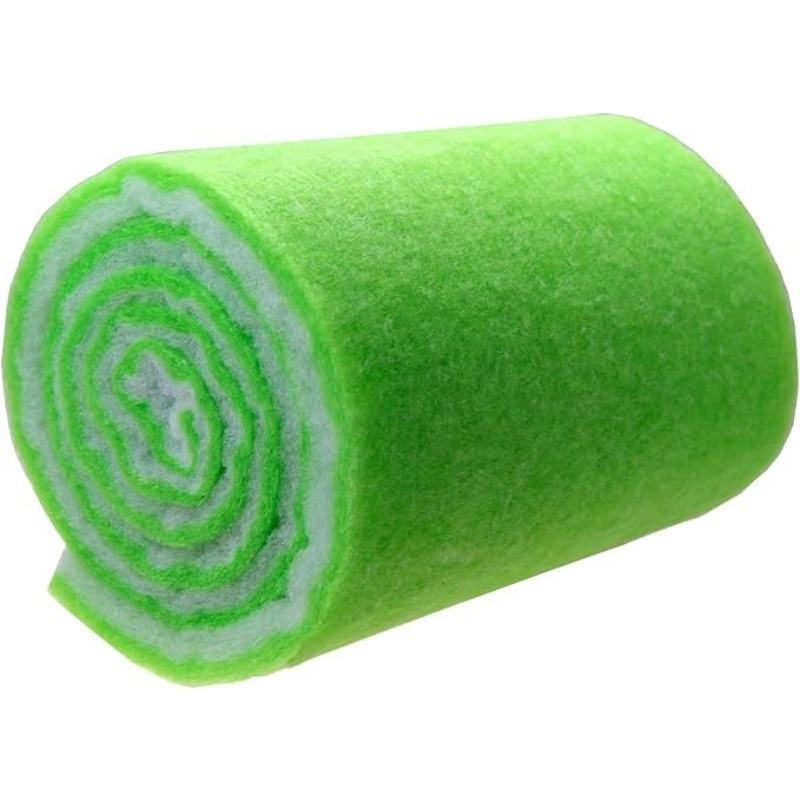
A premium dual density aquarium filter pad elegantly solves this compromise. It engineers two distinct filtration stages into a single cohesive unit. The top layer consists of an open-fiber, coarse matrix designed to act as a heavy-duty pre-filter. It captures large organic matter, effectively distributing the physical waste load across a much thicker surface area. Because these coarse fibers do not pack tightly together, water continues to flow freely even as heavy debris accumulates.
Directly beneath this, the bottom layer features a tightly woven, dense fiber network designed specifically for ultra-fine water polishing. Because the top layer has already intercepted the larger pore-blocking debris, this fine bottom layer is free to trap microscopic free-floating particles without becoming prematurely choked. This structural advantage dramatically extends the operational lifespan of the pad and maintains optimal pump performance.
Looking at broader industry trends, there is a noticeable shift in the aquarium hobby away from rigid, single-stage filtration. As aquascaping and high-tech planted tanks surge in popularity, hobbyists demand more nuanced water clarity solutions. Market analysis indicates a growing consumer preference for customizable, multi-stage media over traditional branded cartridges.
This evolution is largely driven by the realization that modern setups require adaptable mechanical filtration that standard sponges simply cannot provide. Aquarists now recognize that multi-layered bulk rolls offer superior fluid dynamics. They protect delicate biological stages better and handle the heavy bioloads associated with nutrient-rich aquasoils much more effectively.
Certain tank environments push standard filtration to its absolute limits. In these specific scenarios, upgrading your mechanical media is not just an option—it is an engineering necessity to prevent system failure.
High Bioload Tanks: Certain fish species produce massive, unmanageable amounts of waste. Goldfish process their food quickly and excrete heavy solid matter. Large cichlids and Oscars are messy eaters that frequently chew and spit out pellets, creating a localized cloud of fine food dust. In these environments, single-layer pads are rapidly overwhelmed. A dual-layer pad becomes structurally necessary here. The coarse layer handles the heavy fecal matter, while the dense layer catches the pulverized food dust.
Heavily Planted Aquariums: Aquatic plants constantly shed organic material like melting leaves and trimmed stems. In addition, high-end active substrates naturally break down over time, releasing fine clay and silt dust into the water column. A single-density coarse sponge will let the clay dust pass right through, whereas fine floss will instantly clog with shedding leaves. A two-layer pad provides the exact multi-stage trapping required to manage both macro-debris and micro-silt simultaneously.
Clearing Micro-Bubbles and Algae: Free-floating particulate matter, such as early-stage green water algae blooms or suspended micro-bubbles originating from a protein skimmer, can make a healthy aquarium look unkempt. The secondary tightly woven layer of a dual-density pad possesses a micron rating tight enough to physically intercept these ultra-fine nuisances. By trapping suspended algae cells and disrupting micro-bubble surface tension, the dual-layer structure acts as a highly reliable clarifying agent.
Rescuing a Neglected Aquarium: When rescuing a neglected tank, you usually stir up months of deeply settled detritus. Inserting a dual-layer pad acts as a rapid-response solution. The media quickly binds the overwhelming volume of suspended solids, restoring visual clarity in a matter of hours while shielding the fragile biological media from catastrophic fouling.
A frequent topic on aquarium community forums involves using household materials as cheap filter substitutes. Hobbyists often wonder if craft store pillow stuffing or generic upholstery foam can be safely stuffed into their filters.
From an engineering standpoint, utilizing non-aquarium-grade materials carries significant hidden risks. Many commercial textiles are heavily treated with chemical fire retardants, anti-mildew agents, and synthetic dyes. When submerged in an enclosed aquatic environment, these chemicals rapidly leach into the water column, causing acute toxicity to sensitive fish and reef invertebrates. Furthermore, household materials are simply not engineered for prolonged underwater submersion. They will quickly degrade, sending loose tangled fibers directly into the pump impeller.
For guaranteed safety and peak performance, utilizing a dedicated polyester aquarium filtration pad is the recognized industry standard. Premium synthetic polyester is chemically inert. It will absolutely not leach hidden toxins, alter the pH, or affect the carbonate hardness of your delicate water chemistry.
Structurally speaking, high-grade polyester fibers are thermally bonded rather than glued. This advanced manufacturing process ensures the pad maintains its shape and structural integrity even under high-pressure water flow. This durability makes it completely safe for both delicate freshwater planted setups and highly sensitive saltwater reef tanks.
To achieve the maximum benefit from dual-density media, aquarists must strictly adhere to the golden rule of filter stacking. Water must always encounter the coarsest media first and the finest media last.
When placing your pad into the filter housing, orient it so that the dirty intake water hits the loose, open-fiber side initially. After the large debris is stripped away, the water should then exit through the dense, tightly woven side. If this orientation is accidentally reversed, the fine side will immediately face the brunt of the large waste, causing the pad to clog within days.
Canister Filters: Understanding your specific filter's directional flow is crucial. For bottom-to-top flow designs—like the Fluval 07 Series or SunSun—place the pad at the bottom of the lowest mechanical basket. Ensure the coarse side faces down toward the incoming water. For top-to-bottom flow designs—like the Marineland Magniflow—place the pad in the uppermost tray with the coarse side facing up.
Hang-On-Back and Sump Filters: Most Hang-On-Back filters come equipped with proprietary carbon cartridges. Experienced aquarists often discard these entirely because the activated carbon loses its effectiveness quickly. Replacing the cartridge forces you to throw away beneficial bacteria. Instead, custom-cut a dual-layer pad to slide directly into the chamber. Place the pad so the coarse side faces the intake tube, and tuck a mesh bag of biological ceramic rings behind it.
The aquarium filter industry frequently operates on a razor and blades business model. Manufacturers sell motorized filter units at a relatively low margin but engineer them to rely exclusively on proprietary, single-use slide-in cartridges. These branded cartridges are heavily marked up and designed to be discarded every few weeks. Over the lifespan of a single aquarium, the cumulative cost of these replacements can easily exceed the cost of the glass tank itself.
The most effective way to optimize your filtration budget is by transitioning to a cut-to-fit filter media roll. Purchasing media in bulk completely flips the economic model in favor of the hobbyist. A single roll provides enough square footage to yield dozens of custom-sized pads. When calculating the actual cost per filter change, bulk rolls reduce maintenance expenses to mere pennies per application.
Beyond massive cost savings, bulk rolls offer unmatched versatility. If you maintain a diverse variety of setups—such as a 5-gallon nano shrimp tank, a 55-gallon community tank, and a 150-gallon cichlid tank—buying specific cartridges for every filter type is a logistical nightmare. A standard pair of household scissors is all you need to create perfectly tailored media for any filter housing imaginable.
A common question is whether these pads can be washed to save even more money. In practical terms, the coarse top layer can easily be rinsed in a bucket of old tank water to dislodge large debris. However, the fine bottom layer eventually traps microscopic dirt permanently within its tight fibers. It is generally recommended to gently rinse the pad one or two times to extend its life. After that, full replacement is necessary to maintain unhindered water flow and prevent nitrate buildup.
Knowing exactly when to swap out your media prevents equipment damage. Key indicators include a noticeable reduction in your filter's outflow pressure, water physically bypassing the pad inside the housing, or a sudden return of water cloudiness in the display tank. If rinsing the pad no longer restores the filter's original flow rate, it is time to cut a fresh piece.
Upgrading from standard single-density media to a highly efficient dual-layer system is arguably the easiest and most cost-effective modification you can make. By utilizing a coarse pre-filter and a dense polishing layer in one unified piece, you protect your biological media, extend the time between messy cleanings, and keep your aquarium looking immaculate.
For aquarists looking to truly optimize their setups, investing in a premium synthetic polyester roll is the smart choice. It empowers you to break free from expensive proprietary cartridges and customize your filtration to fit any housing. Ready to upgrade your water clarity? Explore the professional-grade, chemical-free filtration solutions at DOER Nonwovens to find the perfect dual-density media roll tailored to your aquarium's unique demands.
Always place the pad so that the incoming dirty water flows through the looser, coarser side first. After the large debris is trapped, the water should then exit through the denser, finer side to polish away microscopic dust.
Yes, it is highly recommended by experienced aquarists. Using bulk media is vastly cheaper and often provides superior mechanical filtration. It allows you to keep your biological media completely separate so you never throw away beneficial bacteria during maintenance.
No. True aquarium-grade synthetic polyester is completely chemically inert. It will not leach any hidden toxins, alter your pH levels, or harm the sensitive beneficial bacteria living in your system.
This typically ranges from every 2 to 4 weeks, depending heavily on your specific tank's bioload and feeding habits. If you notice a visible drop in your filter's water flow, it is a clear sign that it is time to rinse or replace the pad.
Yes, over-packing a filter housing can severely restrict water flow. This causes the pump motor to overwork and potentially burn out. A single, well-placed dual-density pad is far more efficient and safer for your equipment than cramming multiple sponges into the chamber.
Using craft store quilt batting is strongly discouraged. Commercial batting is frequently treated with chemical flame retardants and anti-mildew agents that are highly toxic to fish and invertebrates. Always use dedicated, chemical-free aquarium media to ensure the safety of your aquatic ecosystem.
The most obvious sign of a clogged filter is a significant decrease in the water output flow rate. Additionally, if you open the filter and see clean, dry patches on the filter pad while the edges are filthy, water is bypassing the media. This channeling means dirty water is flowing around the pad rather than through it, signaling an immediate need for replacement.


